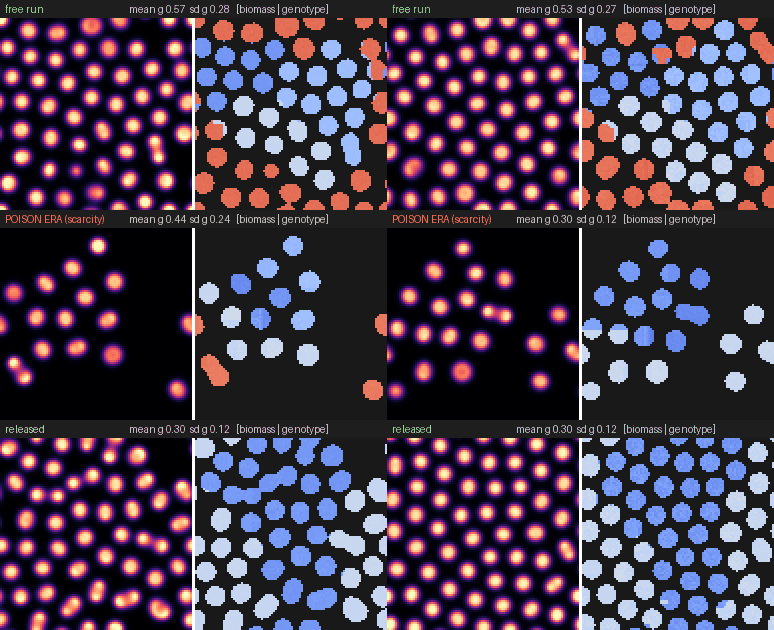
FILM (god view, E0): mutation keeps the colony mosaic colorful (genetic variance); a poison era then bleaches it toward blue — frugal genotypes — live, colony by colony. Watch sd g: variance drops under selection and recovers by mutation afterwards.
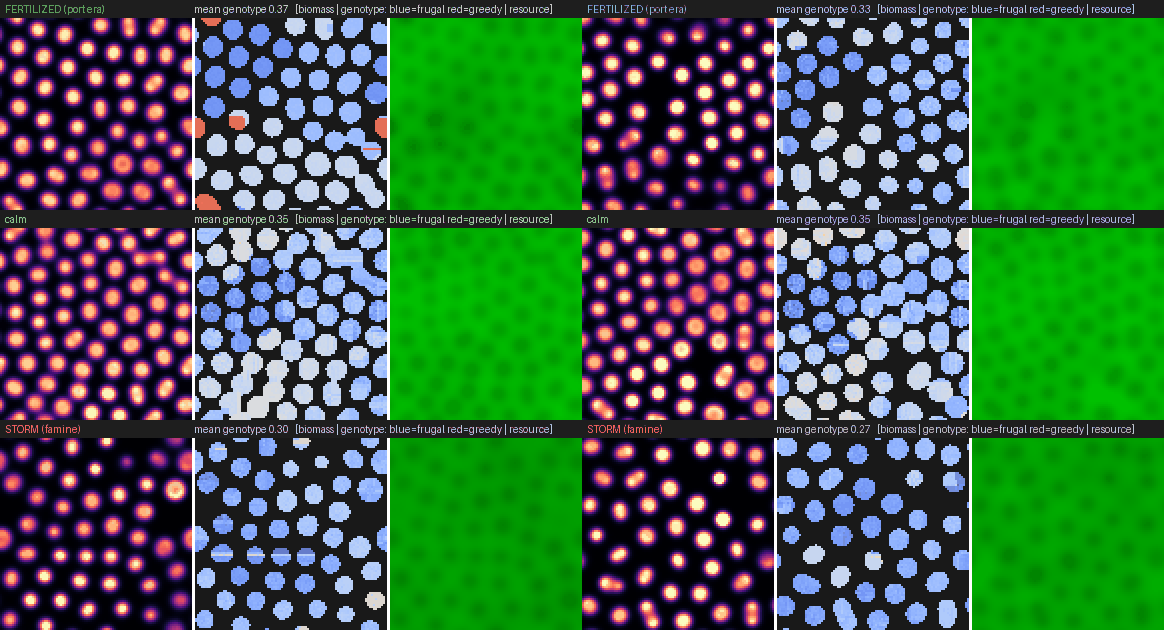
Ecology plus heredity. Organisms carry a continuous trait field g — their genotype. New tissue copies the genotype of its dominant parent neighbour (particulate inheritance) with small mutations at growth sites; nothing else about the update rule mentions genes. The genotype sets each cell's metabolism through a fixed "biochemistry" map — consumption rises with g, robustness falls — so greedy and frugal stop being built-in kinds (as in the B track) and become regions of one continuous trait space. Then the environment writes into the gene pool: under scarcity, high-g tissue starves first and the population's mean genotype slides toward frugality; under plenty it drifts back. E0 is the laboratory version (you supply the eras through the ports); E1 is the storm world — recurring famines (hidden period, roughly half the time) are part of the world's own weather, deep enough to select but not to sterilize, so the population you meet has already evolved to fit its climate, and keeps evolving on camera as you intervene. Two clocks to discover: the storm cycle, and the slower clock of the gene pool tracking it. A caution from our own measurement: inheritance must be particulate — an early blending version destroyed variance geometrically (Jenkin's 1867 objection, reproduced in silico) and shipped no evolution at all (lab log, addendum 20).
EVOLUTION: organisms carry a heritable trait g (their 'genome'), copied to new tissue as they grow, mutating slightly at growth sites. The trait sets each cell's consumption and hardiness through a fixed biochemistry map — greedy and frugal are now REGIONS OF TRAIT SPACE, not built-in kinds. Sustained scarcity (port poison) shifts the whole population toward frugal genotypes, and it RE-EXPANDS once adapted: natural selection with genetic memory. Contracts probe adaptation history: the same drive gives different answers depending on what the population has lived through. Some sensors read a phenotype stain (trait-weighted density) — hidden, as ever.
STORM WORLD: the environment itself cycles — recurring famines (hidden period, ~half the time) alternate with plenty. Because traits are heritable (particulate inheritance: new tissue copies its parent's genotype) and the famine depth sits at the selective sweet spot, the population EVOLVES: it arrives already adapted to its climate, and de-adapts/re-adapts when agents fertilize or poison eras. Two clocks to discover: the storm cycle, and the slower clock of the gene pool tracking it.

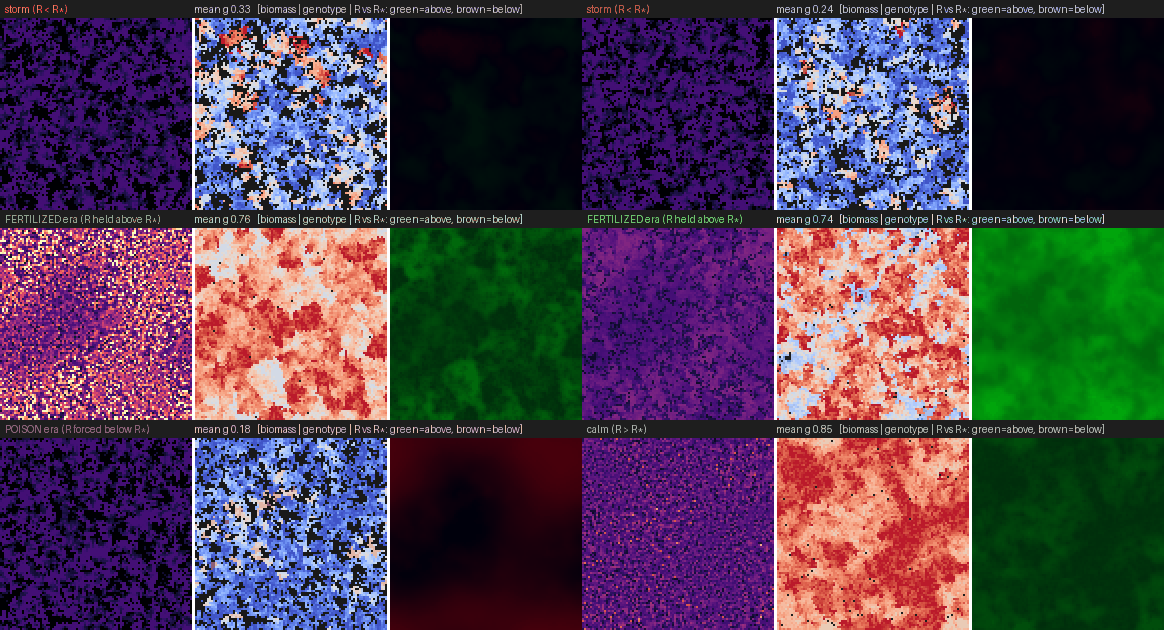
ENZYME ECONOMICS: the deepest world in the benchmark by design philosophy. Nothing biological is authored — only PRICES and CONSERVATION: tissue earns energy in proportion to enzyme amount (the heritable gene g) times local substrate, pays rent in proportion to enzyme amount, stores at most a finite larder, burns itself when bankrupt, and dies below a viability floor. From that ledger the world COMPUTES what E0/E1 had built in by hand: a critical substrate level R* = rent/earnings (above it greed pays, below it frugality survives), famine/plenty selection asymmetry, and the whole trade-off structure — theorems of bookkeeping, not authored curves. Storms cycle the world across R* (~1000-tick weather), so the gene pool oscillates with the climate; ports fertilize/poison eras that move it on demand. Parameters were found by search over price-space, screened by a certification battery (survival, bidirectional selection, variance maintenance, R*-straddling) — worlds are selected for interesting physics, not designed around it.