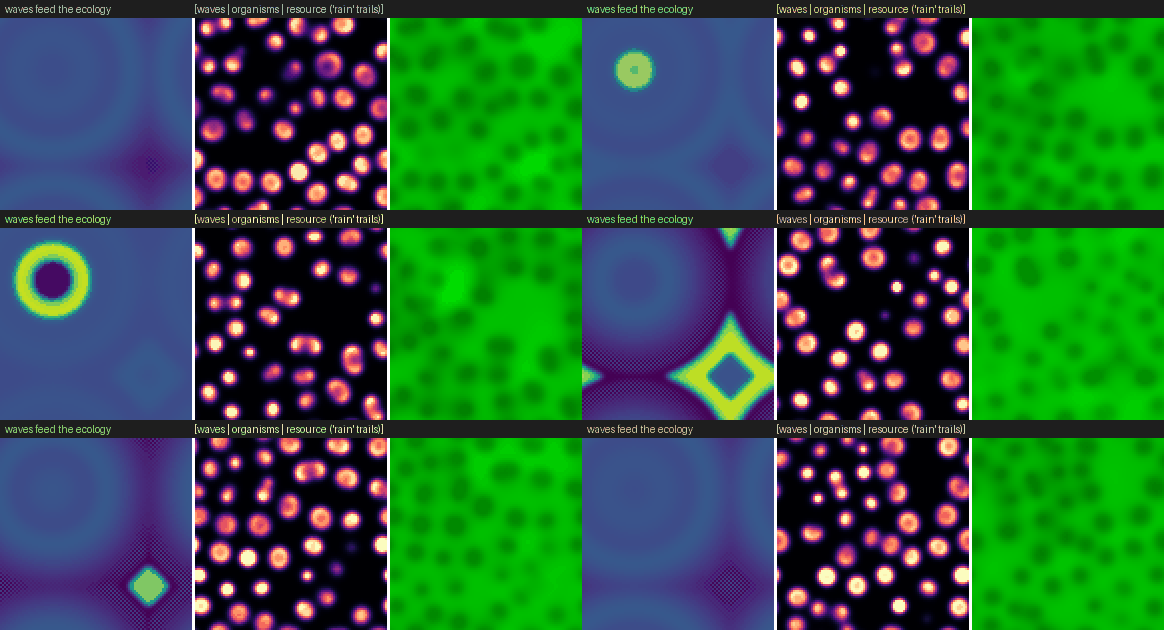
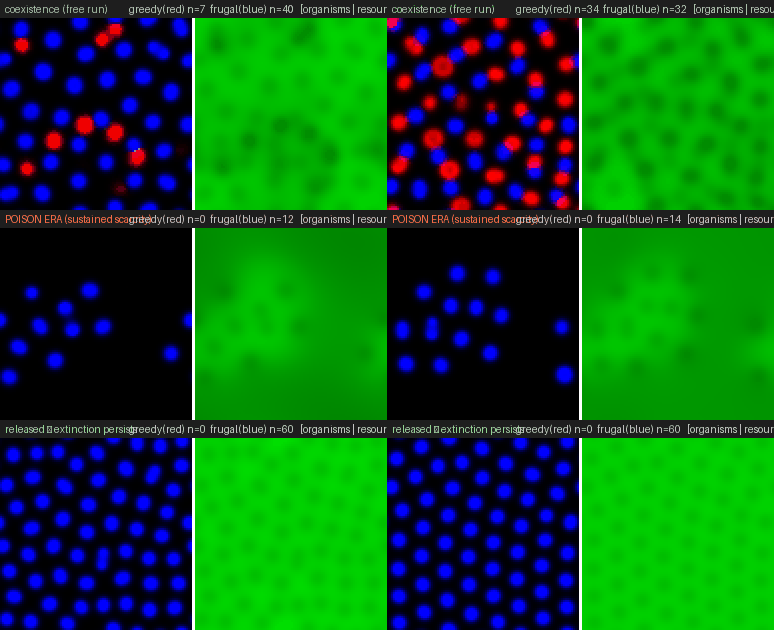
Take the chemistry track's organisms and make their food finite: a third field, the resource, regenerates slowly toward a ceiling, diffuses, and is consumed where organisms live. That one change turns chemistry into ecology, and the classical population laws emerge on their own: carrying capacity (B0a — logistic saturation nobody programmed), competition (B0b — a greedy and a frugal variant dividing the map), natural selection (B0 — sustained scarcity drives the greedy variant extinct, and the extinction persists after release because the dead do not recolonize), the exclusion boundary (B1 — each instance secretly starts coexist-side or excluded-side; long drives can push it across), and waves as weather (B2 — the C4 wave layer is the food delivery system: each passing wave locally boosts regeneration, "rain"; base regeneration alone cannot sustain life, so the population tracks the wave rate and inherits the refractory trap — pace the medium too fast and meals fail). Biology-track sensors read organism density blind to variant ("two kinds of life exist" is itself a discovery). Population aggregates respond smoothly to most drives, which is why pure-ecology worlds sit mid-tier while wave-fed B2 breaks frontier models.
Curriculum world: ONE organism variant + the regenerating resource. The only law is logistic growth to a carrying capacity that ports can raise (fertilize) or lower (poison). The first rung of the biology ladder.
Curriculum world: two variants in a RICH world — competition and coexistence without extinction risk. Second rung.

BIOLOGY track opens: an ecosystem. Two organism variants compete for one regenerating resource. The discoverable laws are population-scale: colonies grow to a carrying capacity; the two variants divide the world (one grows fast but consumes greedily, the other is frugal but fragile); and under sustained scarcity — which the agent can CREATE by driving ports negative (poisoning resource regeneration) — the greedy variant goes extinct while the frugal one inherits the world. Sensors read species-blind organism density; ports fertilize or poison regions. Contracts probe equilibrium populations, capacity shifts, post-poison recovery, and the extinction boundary.


Selection-boundary worlds: the resource ceiling is drawn NEAR the exclusion threshold, so each instance secretly lands on one side — fast variant present, or already excluded. Long sustained drives can push the ecosystem across. Contracts probe the boundary; agents that never ask which side they are on misprice every long-horizon prediction.


HYBRID: the excitable wave layer feeds the ecology. Each traveling wave locally boosts resource regeneration (rain); base regeneration alone cannot sustain life, so the population tracks the wave rate — and pacing the medium too fast triggers refractory conduction block, DELIVERING FEWER MEALS (a non-monotonic trap). Ports inject current: agents can create pacemakers, i.e., feed the world. Composed from C4 + B0a, each separately certified.